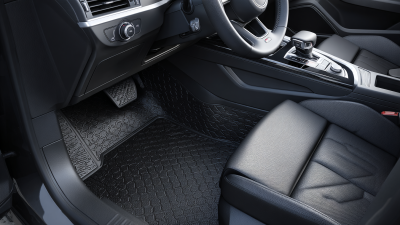
Picking out a universal car floor mat might seem pretty straightforward at first—until a rainy day test drive reveals its flaws. Water starts pooling near the pedals, gravel sneaks under the edges, and if the mat isn’t anchored well, it shifts when you hit the brakes. A good mat should keep your car protected, stay put, be a breeze to clean, and feel comfortable under your feet. It also needs to fit different car interiors without leaving annoying gaps that could be dangerous.
David MacNeil, the guy who founded WeatherTech, once said, “A floor mat should protect your vehicle without messing with the driver.” That’s a simple but smart idea—especially when you’re comparing rubber, thermoplastic, and carpet mats. But don’t just fall for the big marketing claims. You’ve got to look at the size, how it stays in place, the grooves on the surface, and if there’s a heel pad. Start by measuring the front footwell—then do the same for the rear floor. Tiny differences can make a big difference.
Take a good look at the raised edge around the mat. It should catch spills like coffee or melting snow before they reach the carpet. Flip it over and check out the underside too. The gripping points should hold tight without peeling up or damaging your original flooring. Some mats claim to be universal but end up curling around seat rails or blocking rear vents—that’s pretty annoying.
In real life, the true test comes after installation. Move your seats around, try out the pedals—make sure they stay completely unobstructed. And don’t forget about cleaning. If a mat is a pain to maintain, chances are you’ll just neglect it. Also, keep in mind: no single product fits every vehicle perfectly, so don’t buy into that idea blindly. The best choice is one that offers solid coverage, stays stable, is made from decent material, and comes from a reputable brand that gives honest info about fitment.
Choosing universal car floor mats begins with accepting one awkward fact: “universal” rarely means perfectly universal. The U.S. Environmental Protection Agency’s 2023 Automotive Trends Report shows that the average new-vehicle footprint grew from about 119 square feet in 2008 to roughly 126 square feet in 2022. That spread affects footwell length, pedal spacing, and rear-seat coverage. A trim-to-fit design offers flexibility, while segmented mats adapt better around seat rails. Measure the driver’s floor carefully, especially near the accelerator and brake.
Material selection changes daily performance. Thermoplastic elastomer mats resist water, oil, and cold-weather cracking, while rubber feels heavier and usually stays flatter. PVC can reduce cost, but some products become stiff after prolonged heat exposure. Carpet mats look less industrial and reduce noise, yet they absorb moisture and need more frequent drying. I have tested universal mats that looked strong but curled at the corners after several weeks. That small defect matters. Raised edges should be firm, not floppy, and the underside needs textured anti-slip backing. NHTSA consumer guidance also warns that floor mats must not interfere with pedal operation or stack over another mat. Check retention hooks, cut only along marked lines, and leave clear space around every pedal. A beautiful pattern cannot compensate for poor fit.
Choosing universal car floor mats begins with measuring the actual floor area, not trusting a vehicle category. The 2024 EPA Automotive Trends Report places the average new-vehicle footprint near 49 square feet. However, exterior footprint does not equal usable cabin floor space. Wheel arches, seat rails, center humps, and pedal wells reduce the available area. Measure each footwell separately.
Use a flexible tape measure. Record the widest point, narrowest point, front-to-back length, and tunnel height. Check the driver’s side carefully. The mat must stop before the accelerator and brake pedals. It should also clear seat tracks and factory retention points. NHTSA guidance emphasizes secure mat placement and preventing interference with pedal operation. A loose edge is not a small issue.
Rear floors need attention too. Measure around the center hump, raised door sills, and sliding-seat paths. S&P Global Mobility reported an average U.S. vehicle age of about 12.6 years in 2024, so universal mats often serve mixed generations. Model-year assumptions can fail. I once measured the widest section first. That was a mistake. The narrowest section decides fit. Leave a small clearance, but avoid excessive gaps that collect sand and water. Do not stack mats. Test every pedal, seat movement, and door closure before regular driving.
Universal car floor mats differ mainly in shape, coverage, and adjustment range. Flat mats fit many footwells but may leave exposed edges. Semi-custom mats usually cover more area and follow common cabin contours. Trim-to-fit designs offer flexibility, though cutting too much cannot be reversed. Fit matters more. Measure twice.
Coverage should protect the carpet beneath the pedals, seat edges, and door-side footwell. A short mat can trap water under its front edge. An oversized mat may interfere with pedal movement or bunch beneath the driver’s feet. Check the mat’s rear edge as well. Rear passengers need stable coverage, especially across the center hump. Raised borders help contain mud, rainwater, and melting snow.
Customization options can improve fit without requiring a vehicle-specific mold. Look for marked cutting lines, removable sections, heel pads, and secure anchor openings. However, never cut near pedals or leave loose material around moving parts. Material thickness also affects comfort and clearance. Rubber-like surfaces are practical in wet conditions, while textile surfaces can feel quieter and softer. A careful inspection is still necessary because “universal” does not mean perfect. Cabin shapes vary, and even accurate measurements can miss a small curve or fastening point. Test the mat with the seat fully forward and backward. Safety comes before appearance.
How to Choose Universal Car Floor Mats for Any Vehicle?
Universal car floor mats should protect the cabin without creating a driving hazard. From my fitting experience, the safest choice begins with accurate measurements. Check the footwell length, width, seat-rail position, and floor contours. A mat that looks large enough may still slide forward during braking.
Fit matters more than appearance. Look for mats with a grippy underside, raised edges, and flexible sections that can be trimmed carefully. However, trimming too much can expose carpet near the pedals. Test the mat with the seat fully forward and fully back. It should remain flat, without folding beneath the accelerator or brake pedal. Leave visible space around every pedal. Small gaps are better than contact.
Pedal clearance needs a hands-on check. Press each pedal repeatedly while the engine is off, then inspect the mat’s movement. Try normal foot angles, not just a perfect showroom position. I once accepted a mat that seemed secure, but its corner curled after several days. That mistake changed my fitting routine.
Tips: Remove the original mat before measuring. Use paper to create a temporary template. Secure rear mats around seat rails, but never block them. Clean trapped sand regularly, since grit can reduce grip. Do not rely only on included clips; their position may not suit every vehicle. A second check after one week is worthwhile.
| Evaluation Dimension | What to Measure or Check | Practical Acceptance Standard | Warning Signs | Suggested Result |
|---|---|---|---|---|
| Vehicle Compatibility | Compare the mat’s length, width, tunnel shape, and seat-rail position with the vehicle’s front and rear footwells. | The mat should cover the main footwell without folding, blocking seat tracks, or riding up the side panels. | Large uncovered areas, excessive overlap, or a mat that must be sharply bent to fit. | Accept |
| Driver-Side Pedal Clearance | With the mat installed, fully depress the accelerator, brake, and clutch pedals if fitted. Check the complete pedal travel with the engine off. | No pedal may touch, catch, or become restricted by the mat at any point in its full range of movement. | Material rises behind the pedals, slides forward, or can pass over or between the pedals. | Reject |
| Mat Retention | Inspect factory retention points and check whether the universal mat has compatible holes, clips, hooks, or a secure non-slip backing. | The mat must remain fixed during repeated entry, exit, braking, and seat adjustment. It must not move toward the pedals. | No retention system, loose eyelets, damaged clips, or visible movement when pushed by hand. | Accept |
| Trimming Accuracy | If the mat is trimmable, place the original mat over it as a template and cut only along marked guide lines. | Edges should follow the footwell shape while leaving all retention points and pedal-area boundaries unobstructed. | Cutting removes a retention hole, leaves sharp projections, or creates a curled edge. | Review |
| Edge and Heel Clearance | Check the driver’s heel position, sidewalls, seat rails, door sill, and center console throughout normal seating adjustments. | The heel can rest naturally, and the mat does not interfere with foot movement, seat travel, or door closure. | Heel rests on a raised lip, edge catches footwear, or the mat folds under the seat. | Accept |
| Surface Grip | Test the top surface with ordinary footwear and inspect the underside on carpet or molded flooring. | The top should provide stable footing, while the underside should resist sliding without damaging the vehicle carpet. | Smooth wet surface, loose backing, excessive movement, or a backing that transfers residue to the carpet. | Review |
| Wet-Weather Containment | Look for raised borders, drainage control, and enough surface area to contain water, mud, or melting snow. | Liquid should remain on the mat during normal foot movement and should not run toward pedals, wiring, or carpet edges. | Flat edges, visible overflow paths, or water pooling where it can reach electrical components. | Accept |
| Material and Backing Condition | Inspect the mat for cracks, tears, curling, strong persistent odor, exposed reinforcement, and backing deterioration. | The mat should lie flat, retain its shape, and remain flexible enough to follow the footwell without cracking. | Permanent curling, brittle areas, exposed sharp fibers, or damaged anti-slip backing. | Reject |
| Rear-Row Fit | Check coverage around the center hump, seat rails, rear vents, and the front edges of the rear footwells. | Passengers should have stable footing, and the mat should not obstruct rear-seat movement or seat-belt access. | Sections overlap, slide beneath the front seats, block vents, or leave hazardous gaps near the center hump. | Review |
| Cleaning and Maintenance | Review whether the material can be removed, shaken, vacuumed, rinsed, and dried without losing its shape. | Cleaning should not weaken the retention system, deform the edges, or leave the backing slippery when reinstalled. | Mat cannot be removed safely, retains moisture, or becomes curled after washing. | Accept |
| Final Installation Test | Install the mat, move the driver’s seat through its usable range, and repeat pedal and edge checks before driving. | All pedals operate freely, the mat stays fixed, doors and seats move normally, and no edge contacts moving controls. | Any movement toward the pedals, interference with controls, or uncertainty about the installation. | Do Not Use |
Material choice matters more than appearance when driving conditions change. In snowy regions, road salt and grit can settle under wet shoes. The U.S. Environmental Protection Agency reports that American roads receive roughly 24 million metric tons of salt each year. That residue can attack weak backing materials and create a slippery surface. Choose thick thermoplastic rubber with raised channels, a textured heel pad, and edges high enough to hold melted snow. Rubber is practical here, but it may harden in severe cold. That limitation deserves attention.
For hot climates, select mats with ultraviolet-resistant compounds and stable dimensions. A soft PVC mat can curl after repeated heat exposure, especially near a sunlit door. Look for published abrasion, tear-strength, and temperature-resistance test results. ASTM and ISO methods can make these claims easier to compare. Do not rely on thickness alone. A heavy mat can still slide.
NHTSA safety guidance warns that loose or incorrectly positioned mats may interfere with accelerator or brake pedals. Measure the footwell carefully, then check anchor compatibility and pedal clearance. Universal fit is never truly universal. In muddy areas, a removable liner with deep grooves is easier to clean, while carpeted mats feel quieter and more comfortable in dry conditions. I would inspect the underside after every rainy week. Small shifts are easy to miss. That habit may matter more than a low price.
Universal car floor mats seem simple, but installation requires careful checking. Measure the footwell before buying, including its widest and narrowest points. A flexible mat should cover the carpet without touching the pedals. Check the driver’s side twice. Even a small curl near the accelerator can become a serious distraction.
I once installed a mat that looked secure but shifted under the heel during a long drive. The problem was a missing retention clip, not the mat’s size. Most vehicles need mats trimmed only along marked lines, and cutting too much is difficult to repair. Place each mat flat, lock its fasteners, and slide your feet across the surface. Nothing should catch.
Cleaning needs depend on the material and daily use. Remove the mats outside and shake away loose grit. Rinse rubber mats with mild soap, then scrub the grooves with a soft brush. Fabric mats need vacuuming first, because wet dirt can form a stubborn paste. Avoid strong solvents and allow every mat to dry completely before reinstalling it. Damp backing can create unpleasant odors and encourage carpet moisture. Inspect the edges monthly for cracks, curled corners, or worn grip points. I sometimes skip this check when the interior looks clean, but hidden movement can still develop. A dry, properly fitted mat is easier to maintain.
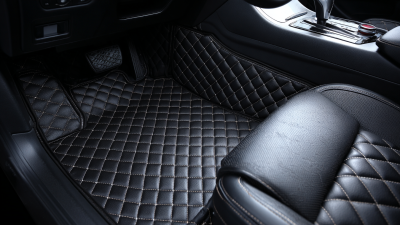
Classic Diamond Heavy-Duty 4-Piece Car Mats: Stylish Protection for Every Drive
Add a refined touch to your vehicle while helping protect its interior with the Classic Diamond Heavy-Duty 4-Piece Car Mats. Designed with a stylish diamond texture, these mats combine practical coverage with a clean, modern appearance. Made from durable PVC, they help guard the floor against everyday dust, dirt, moisture, and accidental spills, making them suitable for daily commuting, family journeys, and weekend travel.
The universal design offers flexible compatibility with many vehicle categories. The set includes two front mats measuring 71.5 × 46 cm and two rear mats measuring 46.5 × 43 cm, providing balanced coverage throughout the cabin. Available in black, grey, or tan, the mats can complement a variety of interior styles. With a total weight of 4.0 kg, they provide a substantial feel while remaining practical to handle. Each set is supplied with a hanger and paper card, making storage, display, and retail presentation convenient.
Remove the old mat first. Measure the footwell’s longest and widest points. Use paper to outline unusual curves. Measure twice. Check seat rails, floor humps, and the space near each pedal.
The mat should cover carpet beneath the pedals, seat edges, and door-side footwell. Raised borders help contain rainwater, mud, and melting snow. Check the rear edge too. Small uncovered areas can collect grit.
Marked cutting lines can improve fit. Cut slowly and test after every small section. Never cut near pedals or moving parts. Too much removed cannot be restored. A paper template may prevent an expensive mistake.
Keep visible space around the accelerator, brake, and clutch pedals. With the engine off, press each pedal repeatedly. Try several foot angles. The mat must not fold, curl, or catch beneath your heel.
A grippy underside, secure fasteners, and suitable anchor openings can improve stability. Do not trust included clips automatically. Their positions may not match your vehicle. Slide your feet across the mat. Nothing should catch.
Rear mats should remain flat around seat rails and across the center hump. Never block seat movement or cover rail mechanisms. Stable coverage matters.
Rubber-like surfaces usually handle rain, mud, and melting snow well. Textile surfaces can feel softer and quieter inside the cabin. Neither material guarantees a perfect fit. Inspect the backing and edges.
Remove mats outside and shake away loose grit. Vacuum fabric mats before adding water. Wash rubber-like mats with mild soap and a soft brush. Clean the grooves carefully. Avoid strong solvents. Dry every mat completely before reinstalling it.
Check edges, corners, grip points, and fasteners monthly. Look for cracks or curling. Recheck the mat after one week of driving. I once skipped this step. The corner later shifted under my heel.
Choosing the right Universal Car Floor Mat requires more than selecting a product labeled “one-size-fits-all.” Start by understanding the available designs and materials, then measure your vehicle’s floor dimensions, footwell shape, and available coverage area. Compare different mat shapes and trimming options to find a design that provides broad protection without interfering with seat rails, storage areas, or other interior features. Customizable edges can help create a closer fit for vehicles with unusual floor layouts.
Safety and practicality should also guide your decision. Look for secure backing, anti-slip surfaces, raised edges, and sufficient pedal clearance to prevent movement while driving. Select durable materials suited to your conditions, such as water-resistant surfaces for rainy areas or tougher construction for frequent outdoor use. Finally, consider how easily the mats can be installed, removed, cleaned, and maintained. A well-designed Universal Car Floor Mat should offer reliable protection, comfortable footing, easy care, and a stable fit for everyday driving.