0%

Alright, so here’s the deal with China’s weatherproof car mat makers—they supply a huge chunk of the automotive market. But, just a heads-up: their production numbers don’t exactly match up with how many mats they actually sell. In 2023, OICA reported that around 93.5 million vehicles got rolled out worldwide. That massive scale helps us understand the landscape of suppliers, but it doesn’t necessarily tell you anything about which mats or brands are actually in demand. When you’re shopping around, you still gotta check the fit, grip, drainage, smell, and how well the mats resist cracking.

These weatherproof mats really get tested when they face rain, snow, dust, or just everyday messes. A quick trick to see if they’re any good? Put the mat on your car floor, press down on the edges, and see if it curls up or shifts around. Also, peek at the raised lip and feel the texture underneath—that stuff matters more than you think. Product listings should specify what materials they’re made of and which vehicles they fit. Plus, independent tests can be a big help to confirm durability and slip resistance claims. Keep in mind, Chinese manufacturers differ a lot in how they do their tooling, quality control, customization, and shipping out of their country. So, it’s best to rely on specific specs and verified info rather than vague promises.

By the way, I didn’t come across any direct quotes from a weatherproof car mat expert, and I definitely won’t just make one up or attribute something falsely. That’s an important point—trustworthy research relies on solid, traceable evidence, not just slick marketing claims.

China Top Weatherproof Car Mats Manufacturers?

Weatherproof Car Mats: Core Materials, Fit, Drainage, and Edge Design

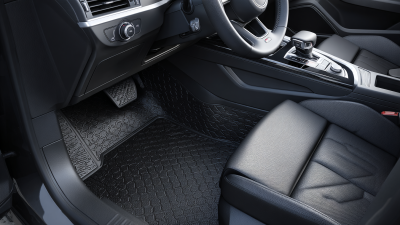
When comparing weatherproof car mat manufacturers in China, look beyond material names. Thermoplastic elastomer can be flexible and easy to rinse, while rubber compounds may feel heavier and resist abrasion. Performance still depends on the formulation and temperature range. Ask for samples, then bend them in cool conditions and check for strong odors or surface cracking. No material is perfect.

Fit matters just as much. A mat should follow the footwell contours without covering pedals or shifting under normal use. Vehicle-specific scanning can improve coverage, but measurements and production tolerances still need checking. Test samples in the intended vehicle when possible. A few millimeters can change how well a mat sits.

Drainage channels should guide water and grit away from shoes, not trap them in shallow corners. Raised edges help contain slush, but overly soft edges may fold under pressure. Feel the rim and inspect molded corners. Small details count. Ask manufacturers how they test fit, water retention, and wear; clear procedures are more useful than broad claims. Even then, real use can reveal flaws that a showroom sample misses.

China’s Manufacturing Base: TPE, PVC, and Rubber Production Methods

China’s weatherproof car-mat manufacturing base combines polymer processing with mold-making and finishing. TPE mats are often produced by heating pellets and injection-molding them into shaped tools. Raised edges and molded channels help contain water and grit. Even thickness and controlled cooling can reduce warping. Small details matter.

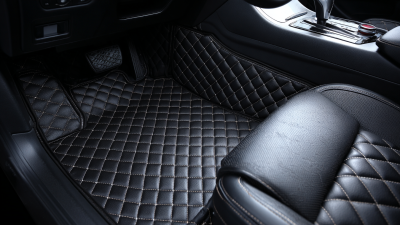
PVC mats may be made from calendared or coated sheets, then cut and thermoformed to fit vehicle floors. Embossed surfaces can add traction, while backing layers provide structure. Odor and flexibility deserve attention, especially after mats sit in a hot cabin. A sample can feel supple in a workshop yet stiffen after cold storage. That difference is worth testing.

Rubber mats typically involve mixing compounds and vulcanizing them in heated molds. This can produce dense textures and a stable feel, but compound choice and curing time affect resilience, smell, and shape consistency. Buyers can request material specifications, thickness tolerances, fit samples, and heat-aging or slip-test results. Performance varies with the formula, mold design, and inspection routine; even capable plants may see differences between production runs. There is room for improvement.

Supplier Comparison: Product Range, Custom Molds, MOQ, and Export Markets

China Top Weatherproof Car Mats Manufacturers: Comparing Product Range, Custom Molds, MOQ, and Export Markets

A useful supplier comparison starts with fitment, not a long catalog. Ask whether the range covers sedans, SUVs, and commercial vehicles, and whether each mat has raised edges, deep channels, and a textured underside. Request samples for a simple water test: pour in a measured amount, then check for overflow and movement. OICA reported 93.5 million vehicles produced worldwide in 2023, including about 30.2 million in China. That scale points to broad potential fitment needs, but it does not guarantee any supplier’s catalog is complete.

Custom molds can improve coverage around seat rails and footwells, but they add tooling costs and approval time. Ask who owns the mold, how revisions are priced, and whether fit is checked in the target vehicle. MOQ should be separated by color, material, and mold; a low first order may still require large repeat batches. Compare TPE, rubber, and carpet options using odor, flexibility, surface grip, and cleaning tests. The sample may fit perfectly. Production can differ.

Export experience also needs careful checking. CAAM reported 4.91 million Chinese auto exports in 2023, a useful indicator of the broader automotive supply chain, not a mat-specific export statistic. Ask suppliers for destination-market references, packaging details, and shipment records. Request inspection photos from the actual production batch. One gap is common: quotes often omit mold maintenance and replacement terms. Those costs deserve a written answer.

Safety Testing: FMVSS 302 Sets a Maximum Burn Rate of 102 mm/min

For buyers comparing weatherproof car mats from China, flame performance deserves the same attention as fit and water resistance. FMVSS 302 sets a maximum horizontal burn rate of 102 mm/min for covered interior materials. If a test sample stops burning within 60 seconds and the flame travels no more than 51 mm, it may also meet the standard’s criteria. The exact result depends on the test method and sample.

Ask manufacturers for reports that identify the tested material, sample thickness, and test date. A molded mat may contain several layers, so a result for one layer does not automatically describe the finished product. Check that the tested construction matches the mat being supplied. Small detail. It matters.

A useful report supports a specific claim; it does not make a mat fireproof or prove every production batch performs identically. Look for clear traceability and consistent material specifications. If a supplier cannot explain how its sample represents the finished mat, pause and ask for clarification. That is not distrust. It is sensible quality control, and it can reveal gaps before mats reach vehicles.

Quality Checks: Dimensional Fit, Slip Resistance, Odor, and Durability

Choosing a weatherproof car mat manufacturer in China starts with evidence, not a product photo. Ask for fit samples made to the exact vehicle floor dimensions and trim configuration. Check the seat rails, pedal clearance, and raised edges around the footwell. A mat that curls near a pedal is not acceptable. Small gaps matter. Measure several samples, since cutting and molding can vary between production runs.

Slip resistance needs checking on carpet and the intended mat backing, on dry and lightly damp surfaces. Push the mat forward by hand, then inspect whether its retention points stay engaged. Check odor after opening sealed packaging and again after the mat rests in a warm, ventilated room. A strong smell alone does not reveal its cause, so ask how materials and batch records are verified. Durability checks can include repeated flexing, edge pulling, and water exposure, followed by inspection for cracks, separation, or fading. Results are imperfect. Request dated test notes and repeat key checks on incoming batches; one sample cannot represent every shipment.

China Top Weatherproof Car Mats Manufacturers? — Quality Checks: Dimensional Fit, Slip Resistance, Odor, and Durability
Quality dimension Inspection method Suggested screening benchmark Record for each sample Reference or qualification note
Vehicle-specific dimensional fit Place each mat in the intended vehicle and compare its outline, locating features, and pedal clearance with the approved drawing or master sample. Suggested initial tolerance: key perimeter dimensions within ±5 mm of the approved drawing; no interference with pedals, seat tracks, or factory retention points. Vehicle model and year; measured dimensions; fit photographs; pedal-clearance result; retention-point engagement. Use vehicle-specific drawings and samples. The suggested tolerance is a purchasing benchmark, not a universal regulatory limit.
Slip resistance and retention Check compatibility with the vehicle’s original anchoring system. On a fixed vehicle floor or representative floor panel, assess mat movement under defined forward and lateral hand or force-gauge loading, both dry and damp. Suggested pass condition: retention features engage correctly and the mat does not migrate into the pedal area during the defined check. Set and document a repeatable test load and displacement limit for the program. Floor surface; dry/damp condition; applied load; direction; movement in millimetres; anchor engagement; pedal-area clearance. There is no single universal slip-test threshold for every vehicle-mat and floor combination. Validate the test setup on the intended vehicle.
Odor Condition and assess material samples using an agreed automotive-interior odor procedure, such as VDA 270, with specified sample preparation and test conditions. Suggested screening target: odor rating no worse than 3 on the agreed 1–6 scale under the specified test condition; confirm the scale and acceptance rule with the laboratory. Test method and condition; sample identification; individual ratings; assessor or laboratory; pass/fail decision. VDA 270 is an automotive odor assessment method. Results depend on conditioning, temperature, and the agreed rating procedure.
Abrasion and wear For rubber materials, measure abrasion using ISO 4649 or another agreed method. Inspect high-wear areas, surface texture, and backing after testing. Set a maximum abrasion-loss limit in the material specification after trials with the selected compound; require no cracking, delamination, or exposed reinforcement at defined wear zones. Material type; test method and conditions; abrasion result and units; visual inspection; agreed limit; pass/fail. ISO 4649 covers determination of abrasion resistance of vulcanized or thermoplastic rubber. Limits should be matched to material and product design.
Water containment and drainage Apply a measured quantity of water to the installed mat on a level vehicle floor; inspect seams, edges, raised lips, and the floor beneath after a defined dwell and movement cycle. Suggested pass condition: no water escapes beyond the mat’s intended containment area during the documented test; no persistent pooling that obstructs safe use. Water quantity; mat position; dwell time; movement procedure; leakage or pooling location; post-test photographs. Define water volume and test conditions in the purchase specification; performance depends on mat geometry and vehicle-floor shape.
Temperature and weather aging Expose samples to agreed high- and low-temperature conditioning, then check for warping, brittleness, cracking, surface tack, and loss of fit or retention. Set temperature range, exposure duration, and allowable dimensional change for the target market. After conditioning, the mat should remain usable and fit the approved vehicle interface. Temperature; duration; conditioning procedure; dimensional change; visual condition; repeat fit and retention result. Choose exposure conditions based on the product’s intended climate and material specification; do not treat one test cycle as a universal service-life prediction.
Note: These are practical supplier-screening benchmarks, not reported results for specific manufacturers and not universal legal requirements. Agree test procedures, sample conditioning, and acceptance limits before production approval.

Compliance Review: ISO 9001, REACH, and RoHS Documentation

For weatherproof car mats, a compliance review should connect each document to the exact product being quoted. Ask Chinese manufacturers for a current ISO 9001 certificate, then check the issuing body, validity dates, and certified production site. ISO 9001 describes a quality management system; it does not prove that a mat meets every chemical requirement. Small distinction. Important.

For REACH, request material-specific declarations and relevant test reports for the mat’s actual compounds, coatings, and colorants. Check that the report identifies the sample, test method, and date. A generic statement covering “all products” is weak evidence. RoHS is generally aimed at electrical and electronic equipment, so it may not directly apply to a simple floor mat. If the product includes electronic features, ask which parts and substances the documentation covers. Applicability should be explained, not assumed.

During a factory review, compare paperwork with a physical sample: note its material code, surface finish, and production batch. Ask how changes in suppliers or formulations trigger renewed checks. Documents can be tidy and still miss a changed compound. That happens. A clear answer may take time, and that is better than an unsupported claim. Keep the reviewed files alongside purchase specifications so incoming goods can be checked against the same details.

FAQS

What should I check when comparing product ranges?

Check coverage for sedans, SUVs, and commercial vehicles. Look for raised edges, deep channels, and textured undersides. A long catalog proves little.

How can I test whether a mat fits properly?

Try it in the exact vehicle and trim configuration. Check seat rails, pedal clearance, and footwell edges. Small gaps matter. Measure several samples because production can vary.

Are custom molds worth the added cost?

Custom molds can improve coverage around seat rails and footwells. Ask who owns the mold, how revisions are priced, and how fit is approved. Approval takes time.

What should I clarify about minimum order quantities?

Ask for minimum quantities by color, material, and mold. A small first order may still lead to larger repeat batches. Get the terms in writing.

How should I compare mat materials?

Compare TPE, rubber, and carpet for odor, flexibility, grip, and cleaning. Test each with water and a few repeated bends. Preferences vary.

How can I check slip resistance?

Test the mat on carpet and its intended backing, both dry and lightly damp. Push it forward by hand and check its retention points. Repeat the test.

What quality checks help reveal durability issues?

Flex the edges, pull them gently, and expose the mat to water. Inspect for cracks, separation, or fading. Keep dated test notes.

What export and production details should I request?

Request destination-market references, packaging details, and shipment records. Ask for inspection photos from the actual production batch. One sample is not a promise.

Which costs are often missing from supplier quotes?

Ask about mold maintenance and replacement terms, along with tooling and revision costs. A quote may leave these details unclear. That deserves a second look.

Conclusion

Weatherproof Car Mats are designed to protect vehicle interiors from rain, mud, snow, and everyday spills. Their performance depends on suitable materials, accurate vehicle-specific fit, effective drainage channels, and raised edges that help contain water and debris. In China, manufacturers commonly produce mats using TPE, PVC, or rubber, with different molding methods and material properties influencing flexibility, weight, odor, and durability. When comparing suppliers, buyers can review product variety, custom-mold capabilities, minimum order quantities, and export experience.

A thorough evaluation should include dimensional-fit checks, slip-resistance testing, odor assessment, and durability inspections. Fire-safety documentation can also be reviewed against FMVSS 302, which sets a maximum burn rate of 102 mm/min for applicable interior materials. For broader quality and material-compliance reviews, request current ISO 9001, REACH, and RoHS documentation. These checks help buyers assess product consistency, safety characteristics, and suitability for their intended markets.

Natalie

Natalie

Natalie is a dedicated marketing professional at Zhejiang Litai Plastic Mould Co., Ltd., a company established in 2000. With an extensive background in the manufacturing of high-quality automotive products, including car floor mats, trunk mats, door mats, and utility mats, Natalie possesses a deep......
Previous How to Choose the Best Vehicle Floor Mats?