
Picking out the right all-weather car mats is more about practicality than just going for the most eye-catching pattern. I mean, rain, snow, sand, and road salt get tracked in through your shoes every day. Those messes tend to gather around seat rails, pedals, and door sills — places you might not even notice at first. According to the Federal Highway Administration, around 21% of vehicle crashes in the U.S. are related to weather conditions. So, having good interior protection isn’t just about style; it’s actually a safety thing.
Plus, cars tend to stay in use longer these days. S&P Global Mobility says the average age of a light vehicle in the U.S. hit about 12.6 years in 2024. That’s a long time to be protecting your carpet, which is where sturdy mats come in handy. But, honestly, durability on its own isn’t enough. The National Highway Traffic Safety Administration warns that loose or badly fitted floor mats can interfere with your accelerator pedal — definitely not something you want. So, check things like fit, retention clips, coverage around the edges, and enough clearance near the pedals — it’s not just about how they look.
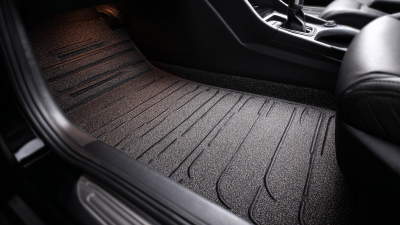
When shopping around, look for features like precise, laser-measured coverage, waterproof channels to keep water from pooling, a good anti-slip backing to prevent movement, and edges that stay raised. It’s a good idea to try the driver’s mat with the seat pushed all the way forward and all the way back — see if the edge curls up near the pedal. Pour a little water into the channels to see if it gets contained well, but remember, that’s just a quick test; long-term use will tell you more. Rubber mats usually handle mud and salt pretty well. Thermoplastic elastomer mats might be a bit easier to clean and usually smell less. Still, don’t just take product claims at face value — check the real deal.
No one mat is perfect for every situation. Some “all-weather” options trap grit underneath, and others fit nicely but can become slippery once wet. This little guide is here to help you weigh protection, safety, ease of installation and cleaning, climate considerations, and warranty info. And beware — photos on websites can be misleading. Trust actual measurements more than just looks.

Define Climate Needs with TPE Ratings from −40°C to 120°C
How to Choose the Best All Weather Car Mats?
Climate should guide your TPE selection, not only the label “all weather.” ASHRAE Handbook—Fundamentals 2021 lists outdoor design temperatures below −40°C in cold regions and above 45°C in hot regions. A parked vehicle can become far hotter than the surrounding air. The U.S. Department of Energy reports that cabin temperatures may rise rapidly under direct sunlight. Your mat faces both extremes.
A TPE rating from −40°C to 120°C suggests useful flexibility and heat resistance. It does not guarantee permanent performance. Ask whether the rating comes from testing such as ASTM D746 for low-temperature brittleness or ASTM D573 for heat aging. Check the test duration, hardness change, cracking, and odor after exposure. Small details matter.
Wet boots, road salt, sand, and melting snow create daily stress. In my experience, a deeply textured surface improves cleaning, but aggressive grooves can trap fine dust. That trade-off is easy to miss. Look for raised edges, stable anchoring, and measured dimensional change after thermal cycling. A material may survive 120°C in a laboratory, yet curl if its design is poorly supported. Choose the climate range you actually face, then leave a safety margin.
How to Choose the Best All Weather Car Mats? - Define Climate Needs with TPE Ratings from −40°C to 120°C
| Climate Profile | Typical Outdoor Temperature | Recommended TPE Rating | Key Material Requirements | Recommended Mat Features | Selection Guidance |
|---|---|---|---|---|---|
| Deep Cold and Snow | −40°C to 0°C (−40°F to 32°F) |
Low-temperature flexibility, crack resistance, and stable dimensions during repeated freezing and thawing. | Deep channels, raised edges, secure anti-slip backing, and easy removal for snow and ice. | Choose a mat with a verified low-temperature rating at or below the area's lowest expected temperature. Avoid materials that become brittle in cold weather. | |
| Cold, Wet, and Slushy | −15°C to 10°C (5°F to 50°F) |
Water resistance, flexibility in freezing conditions, and resistance to salt solution and road grime. | High perimeter walls, textured traction zones, drainage-control channels, and a washable surface. | Prioritize containment capacity and a precise vehicle fit because melted snow and road salt can quickly spread beneath a flat mat. | |
| Temperate and Rainy | 0°C to 30°C (32°F to 86°F) |
Water resistance, dimensional stability, and resistance to repeated wet-dry cycles. | Moderate grooves, sealed or reinforced edges, anti-slip retention points, and a surface that is easy to rinse. | A mid-range temperature rating is generally suitable, but confirm that the mat is designed for the vehicle’s exact footwell shape. | |
| Hot and Humid | 20°C to 40°C (68°F to 104°F) |
Heat stability, resistance to moisture, low odor, and resistance to softening under high cabin temperatures. | Ventilated tread texture, stain-resistant finish, secure fit, and a raised lip to contain wet footwear. | Use a mat with a maximum service rating above expected cabin heat. A parked vehicle can become substantially hotter than the outdoor air. | |
| Hot, Dry, and Dusty | 25°C to 45°C (77°F to 113°F) |
Resistance to heat-related deformation, abrasion, dust accumulation, and repeated cleaning. | Fine-textured upper surface, deep debris channels, durable heel area, and a non-slip underside. | Check the upper temperature rating and abrasion performance. A structured surface helps keep fine sand and dust away from the carpet. | |
| High Sun and Strong UV Exposure | 15°C to 45°C (59°F to 113°F) |
UV stabilisation, color and surface stability, heat resistance, and resistance to long-term embrittlement. | Opaque construction, stable edge geometry, low-glare surface, and a fit that prevents curling near the pedals. | Temperature rating alone does not prove UV durability. Look for documented UV-aging or weathering test information. | |
| Mixed or Four-Season Conditions | −20°C to 40°C (−4°F to 104°F) |
Balanced cold flexibility, heat stability, water resistance, abrasion resistance, and resistance to common road contaminants. | Full-footwell coverage, tall containment walls, integrated retention system, reinforced driver heel pad, and removable design. | This broad rating provides greater temperature margin across changing seasons. Confirm fit, pedal clearance, and retention before installation. | |
| Frequent Mud and Heavy Rain | 5°C to 35°C (41°F to 95°F) |
Low water absorption, chemical resistance to diluted road contaminants, and structural stability when heavily loaded with moisture. | Extra-deep channels, high outer walls, sealed corner transitions, and a surface that can be cleaned without special chemicals. | Measure usable containment volume and inspect the perimeter seal. A high temperature rating is useful, but waterproof coverage is the priority. |
How to read the rating: The first value indicates the lower temperature limit and the second indicates the upper temperature limit claimed for the material or finished mat. Actual performance depends on formulation, thickness, vehicle fit, sunlight, loading, cleaning chemicals, and installation. Always verify the supplier’s test method and ensure that the mat cannot interfere with the accelerator, brake, or clutch pedals.
NEW Rubber Car Mats with Red Heel Pad: All-Weather Protection for Every Drive
Upgrade every journey with NEW Rubber Car Mats featuring a practical red heel pad and dependable all-weather protection. Designed to help shield your vehicle’s interior from rain, mud, dust, snow, and everyday spills, these mats are made from durable PVC for easy cleaning and long-lasting use. The contrasting red heel pad adds a sporty touch while providing extra support in the area most affected by daily driving.
Model No. #23034 offers a universal fit for a wide range of vehicles, making it a convenient choice for family cars, commuting vehicles, and daily-use automobiles. The front mats measure 68 × 48 cm, while the rear mats measure 34 × 44.5 cm, providing broad floor coverage for both rows. Available in black, grey, or tan, they can complement different interior styles. Each set weighs approximately 4.0 kg and comes packaged with a hanger and paper card for neat presentation and convenient storage.
FAQS
ASTM D624 measures the force needed to continue tearing an elastomer sample. Results commonly use kN/m or N/mm. Higher values usually indicate stronger tear resistance.
No. A strong material can still fail because of poor design, thin edges, or weak fastening holes. Small cuts spread.
Request the test method, specimen type, material thickness, temperature, tear direction, laboratory, and test date. Confirm the tested material matches the finished mat.
Only when the testing conditions match. Different specimen shapes or thicknesses can produce misleading comparisons. Check the details carefully.
Examine raised corners, outer edges, fastening points, and bends. These areas often fail before the flat surface. Look for clean edges without thin spots.
FMVSS 302 evaluates the flammability of interior materials under a specified test. The maximum burn rate is 102 mm/min. A slower result indicates better resistance in that test.
It should identify the material, sample thickness, laboratory, test date, and measured burn rate. The sample should include the actual backing and surface layers.
Install it in your own vehicle and check the accelerator, brake, edges, and retention points. It should stay flat and lock securely. Fit still matters.
Raised edges can contain melted snow, rainwater, and spilled drinks. A firm heel pad may reduce wear near the pedals. I once overlooked the fasteners.
Laboratory tests cannot fully reproduce winter gravel, hot interiors, wet shoes, and daily twisting. Press and flex the sample when possible. Real use can surprise you.
Conclusion
Choosing the right All Weather Car Mats starts with matching the material and design to your driving climate. Look for TPE mats rated for a broad temperature range, such as −40°C to 120°C, to help maintain flexibility in freezing winters and hot summers. Before buying, measure the vehicle floor area and confirm accurate coverage around the pedals, seat rails, and footwell edges. Proper retention features and adequate pedal clearance are essential for safe, stable placement, consistent with NHTSA guidance.
Material performance should also guide your decision. Compare TPE, PVC, and rubber using ASTM D412 tensile-strength data, then review ASTM D624 tear-resistance values to assess durability under repeated use. Verify that the mats meet FMVSS 302 flammability requirements, including a maximum burn rate of 102 mm/min. For rainy or snowy conditions, evaluate wet slip resistance through ANSI/NFSI B101.3 ratings. A well-fitted mat with balanced strength, flexibility, traction, and climate resistance offers dependable protection throughout the year.
Related Posts
-

How to Choose Universal Car Floor Mats for Any Vehicle?
-

What are the Best Decorative Car Floor Mats for Your Vehicle?
-

Top 10 Car Mats Online for Every Vehicle Type Purchase?
-

Top 10 Tips for Choosing the Best Auto Floor Mats for Your Vehicle
-
Comparing the Best Car Mats for All Vehicle Types in 2023
-

How to Buy Car Mats Online for the Best Price and Quality?
