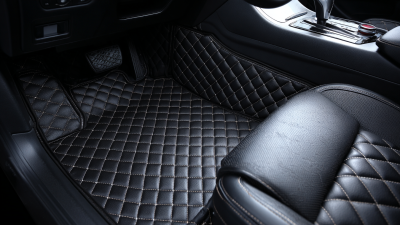
So, picking the right universal car floor mat sounds like a no-brainer, right? But once you actually look at real vehicle interiors, it gets messy. Floor shapes are different, seat rails sit in odd places, pedals aren't lined up the same, and factory anchors? They vary a lot too. A mat that fits one sedan perfectly might curl up right next to the accelerator in another car. That's why this guide walks through seven practical tips to help you make a safer, cleaner, and longer-lasting choice.
Fit should come first—no question. Measure your front and rear footwells, then compare those numbers with the manufacturer's sizing chart. Make sure the mat can reach under the pedals without actually touching them. Retention clips are a big deal, too. A mat that slips around can distract you while driving and create risks you really don't need. Look for strong backing, raised edges, and channels that can hold rainwater, mud, and melted snow.
Material makes a difference in daily comfort. Rubber usually holds up well in wet weather and with muddy shoes. Thermoplastic designs can have sharper contours and be easier to clean. Carpet might feel warmer, but it can also hang onto moisture and odors longer. And the little details matter: check the heel area, trimming options, surface texture, and cleaning instructions. I've learned the hard way that 'universal' rarely means perfect. Some mats still need careful trimming, and if you rush the cutting, you can ruin an otherwise useful product. This guide also looks at odor, long-term wear, installation effort, and overall value—not just pretty photos. The best choice comes down to matching the mat with your vehicle, your climate, your driving habits, and how you maintain it. Small checks go a long way. A few minutes of inspection can save you months of frustration and give you more confidence behind the wheel.
Before choosing a universal car floor mat, study your vehicle’s footwell carefully. Floor shapes vary between sedans, SUVs, vans, and older models. A mat that looks large enough may still leave exposed carpet near the pedals or door sill.
Measure the footwell at its widest and longest points. Check the distance around seat rails, raised edges, and center-console panels. Note whether the front corners are square, curved, or sharply angled. Use paper or cardboard to create a simple outline. It is not perfect, but it reveals shape differences better than guessing. Leave safe space around accelerator and brake pedals. A loose edge can fold forward and interfere with pedal movement.
Material thickness also affects fit. Thick mats may press against seat tracks or prevent doors from closing cleanly. Flexible mats usually adapt better to unusual contours, while rigid mats can hold their shape more effectively. Look for raised borders that contain water, dust, and melted snow. Retention points are important, but they must align with the vehicle floor. Test the mat with the seat fully forward and fully back. Check again after driving briefly. My own fitting attempts have sometimes looked correct at first, then shifted after passengers entered. That small mistake matters. A close fit is useful, but safe pedal clearance matters more.
Climate should guide your material choice. The Federal Highway Administration reports that about 21% of annual vehicle crashes are weather-related, with most occurring on wet pavement. Water, mud, and road salt can quickly turn a vehicle floor into a slippery, stained surface. In rainy or snowy regions, choose rubber or thermoplastic mats with raised edges and deep channels. They should trap moisture without touching the pedals. Secure fit matters.
Dry climates create different problems. Fine sand and dust can settle beneath carpet mats, causing abrasion and unpleasant odors. A tightly woven carpet mat may feel more comfortable, but it needs frequent vacuuming. In hot areas, inspect material claims carefully. Some low-quality plastics become brittle, curl, or develop strong odors after prolonged heat exposure. The National Oceanic and Atmospheric Administration’s 1991–2020 Climate Normals can help you compare local rainfall, snowfall, and temperature patterns before buying.
I once underestimated winter salt. It left white marks around the edges. That mistake changed my preference for removable, washable materials. Still, no material is perfect. Rubber can feel less refined, while carpet can absorb moisture for days. Check the mat’s temperature range, anti-slip backing, and cleaning instructions. The National Highway Traffic Safety Administration also advises ensuring floor mats cannot interfere with accelerator or brake pedals. Test the driver’s position after installation, especially with universal designs.
Choosing a universal car floor mat requires more than checking its advertised size. Use these seven checks: measure footwell length, width, pedal clearance, seat-rail space, tunnel height, rear coverage, and edge depth. S&P Global Mobility reported that the average U.S. vehicle reached 12.6 years in 2024. That age range creates major differences between model generations. A supposedly universal mat may fit poorly across them.
Coverage comes first.
Look for raised borders that contain rain, mud, and melted snow. Front mats should stop short of pedals and remain flat around the accelerator. NHTSA warns that misplaced or incompatible mats can interfere with pedal operation.
Check the retaining points, even when they seem optional. The rear set should cover the center hump without folding beneath passengers’ shoes. Small gaps collect grit quickly.
I learned this after cleaning sand from an uncovered seat-rail channel.
Trim-to-fit flexibility can improve coverage, but cutting requires restraint.
Confirm the printed cut lines before removing material. Trim gradually, then test the mat with the seat fully forward and fully back. Do not cut near fastening holes.
Auto Care Association data valued the U.S. automotive aftermarket at about $593 billion in 2023, showing how many vehicles need replacement components across varied ages. That scale does not guarantee fit.
Measure twice. A flexible edge is useful, yet an uneven cut can expose carpet and create a trip point.
7 Tips for Choosing the Best Universal Car Floor Mat?
A universal mat must stay still during braking, cornering, and wet-weather driving. Look underneath. Its backing should grip the carpet without sliding or bunching. Rubberized textures, raised ribs, and properly positioned retention holes improve traction. Avoid smooth plastic surfaces that move beneath a heel. NHTSA’s 2023 Traffic Safety Facts recorded 40,901 traffic deaths in the United States, so small control problems deserve serious attention. A secure mat cannot prevent every crash, but it can reduce one avoidable distraction.
Pedal clearance matters more than attractive coverage. With the engine off, press each pedal fully and slowly. Check the accelerator, brake, and clutch through their complete travel. The mat must not touch a pedal arm or curl toward it. Move the driver’s seat forward and backward, then repeat the check. NHTSA’s floor-mat safety guidance recommends using the correct retention system and avoiding stacked mats. That detail is easy to ignore.
Measure twice. A mat can look secure while its front edge creeps upward. I would inspect it again after vacuuming and after a rainy drive. A practical test uses a firm heel, not just a fingertip. Push forward, sideways, and backward. If the mat shifts, it fails the traction test. The perfect fit on a dry day proves little. Universal does not mean universally safe.
7 Tips for Choosing the Best Universal Car Floor Mat?
Waterproofing deserves more than a quick splash test. Check for a raised perimeter, sealed edges, and a non-porous surface. These features help trap rainwater, mud, and melted snow before they reach the carpet. A flexible mat should still hold its shape after repeated bending. It should also remain flat around the pedals. Poor fit can become a safety concern.
Cleaning performance depends on practical design. Look for removable mats with deep channels that can be rinsed easily. Smooth surfaces usually release sand faster than dense fabric. The International Carwash Association’s consumer research repeatedly identifies convenience as a major cleaning expectation. That sounds obvious, but many mats are difficult to dry. I have found that trapped moisture creates odors within days. A ventilated backing helps, although it is not magic. Avoid harsh chemicals unless the material’s care instructions permit them.
Long-term durability requires checking thickness, abrasion resistance, and attachment points. S&P Global Mobility reported that the average U.S. light vehicle age reached 12.6 years in 2024. A mat should therefore survive more than one winter. Inspect heel areas, corners, and retaining holes before buying. The U.S. Environmental Protection Agency’s Automotive Trends reports also show vehicles remaining in service through extended ownership cycles. That supports choosing replaceable, repairable materials. Still, “universal” rarely means perfect. Measure the footwell, test pedal clearance, and reconsider any mat that curls after installation.
Compare common mat materials by waterproofing, cleaning convenience, and long-term durability before choosing a universal fit.
Scores use a practical 1–10 scale based on material characteristics: molded TPE and rubber generally provide strong moisture resistance, easy cleaning, and good wear resistance; PVC offers balanced performance, while carpet mats are less suitable for wet or muddy conditions.
Choosing a universal car floor mat requires more than checking its advertised size. Measure the front and rear footwells, including unusual corners and raised center sections. Compare those measurements with the mat’s actual coverage, not only its listed vehicle range. A flexible edge can help, but excessive trimming may weaken protection around the pedals.
Installation deserves careful attention. Remove the original mats before positioning the new set. Check whether the floor has factory retaining posts, hooks, or circular anchors. Use only compatible fasteners, and press each one until it locks without forcing it. The mat should remain flat, with no folding near the accelerator or brake pedal. Move every pedal through its full range afterward. Small details matter.
Never assume a universal mat should sit over the factory mat. That assumption caused trouble during one of my own fitting checks. The stacked layers shifted underfoot and reduced clearance. In most vehicles, removing the original mat is safer unless the vehicle instructions specifically allow layering. Inspect the underside for raised ribs that may interfere with wiring covers or seat rails. A non-slip surface helps, yet it cannot correct a poor fit. Recheck the fasteners after several drives, especially if the mat was trimmed. Measure twice. A little inconvenience is better than discovering movement while driving.
A low price can be attractive, but it may hide thin material or weak edge coverage. Check the mat’s thickness, backing, raised borders, and measured dimensions. A useful universal mat should lie flat without folding near the pedals. Measure twice. In my experience, trimming often improves fit, but careless cutting can remove essential coverage. Look for a clear return policy before opening the package. That protects you when the advertised “universal” fit is not truly suitable.
Warranty terms deserve close attention. Read the coverage period, exclusions, and replacement process. Some warranties cover cracking but exclude damage caused by trimming or extreme temperatures. A longer warranty sounds reassuring, yet difficult claims reduce its real value. Verified user feedback adds practical evidence. Give more weight to reviews describing vehicle type, installation time, odor, movement, and cleaning results. Photos showing the mat beside the seat rails can be more useful than vague praise. Watch for repeated complaints, even when the average rating looks high.
Compare the complete cost, including delivery, fitting clips, and possible replacements. A slightly more expensive mat may offer stronger retention and better long-term value. However, price alone does not prove quality. I once trusted a high rating and overlooked several comments about curling corners. That was my mistake. Check whether reviewers used the same vehicle generation, because floor shapes can differ significantly. After installation, slide the seat, press the brake, and test pedal clearance carefully. A mat that shifts during this check should not remain in use.
Premium Burlwood Carpet PVC 4-Piece Floor Mats combine refined style with practical protection for everyday driving. Designed with a durable PVC and carpet construction, these mats help shield vehicle flooring from dust, dirt, spills, and regular foot traffic while adding a polished burlwood-inspired appearance to the cabin. The universal fit makes them suitable for a wide range of vehicles, offering a convenient upgrade for drivers who value both presentation and functionality.
The set includes two front mats measuring 70 × 50 cm and two rear mats measuring 35 × 45.5 cm, providing coverage throughout the main passenger areas. Their surface is easy to care for, allowing routine cleaning to be handled with minimal effort and helping the interior stay neat over time. Available in black, grey, and tan, the mats can complement different interior styles. With a total weight of 3.85 kg, they offer a substantial feel without being difficult to handle. Each set is supplied with a hanger and paper card, making storage, display, and retail presentation simple.
Measure the widest and longest points.
Leave safe space around the accelerator and brake pedals.
Look for raised borders and a textured, non-slip underside.
Flexible mats usually follow curved footwells more easily.
Confirm the marked cut lines before trimming.
Usually, remove the original mat before installing the replacement.
Inspect the floor for posts, hooks, or circular anchors.
Test the mat immediately, then drive briefly and inspect it again.
Choosing the right Universal Car Floor Mat starts with understanding your vehicle’s floor shape, dimensions, and coverage needs. Measure the footwell carefully and consider whether a trim-to-fit design can provide a more precise fit. Select materials according to your climate and driving conditions, such as waterproof options for rain or snow and durable surfaces for frequent use. Pay close attention to raised edges, textured traction zones, and pedal clearance, as these features help keep the mat secure without interfering with safe driving.
A quality mat should be easy to remove, clean, and reinstall while offering reliable protection against dirt, spills, and wear. Check whether it works with factory mats, includes suitable fasteners, and stays firmly in place during use. Finally, compare the price with the expected lifespan, warranty coverage, and verified user feedback. A balanced evaluation of fit, safety, maintenance, durability, and value will help you choose a practical Universal Car Floor Mat for everyday driving.